
Why Online OCR Copy Text Tool?

In today’s digital world, information is everywhere. We often encounter documents in printed form, scanned images, or even screenshots. These documents may contain valuable text that we want to edit, store, or share.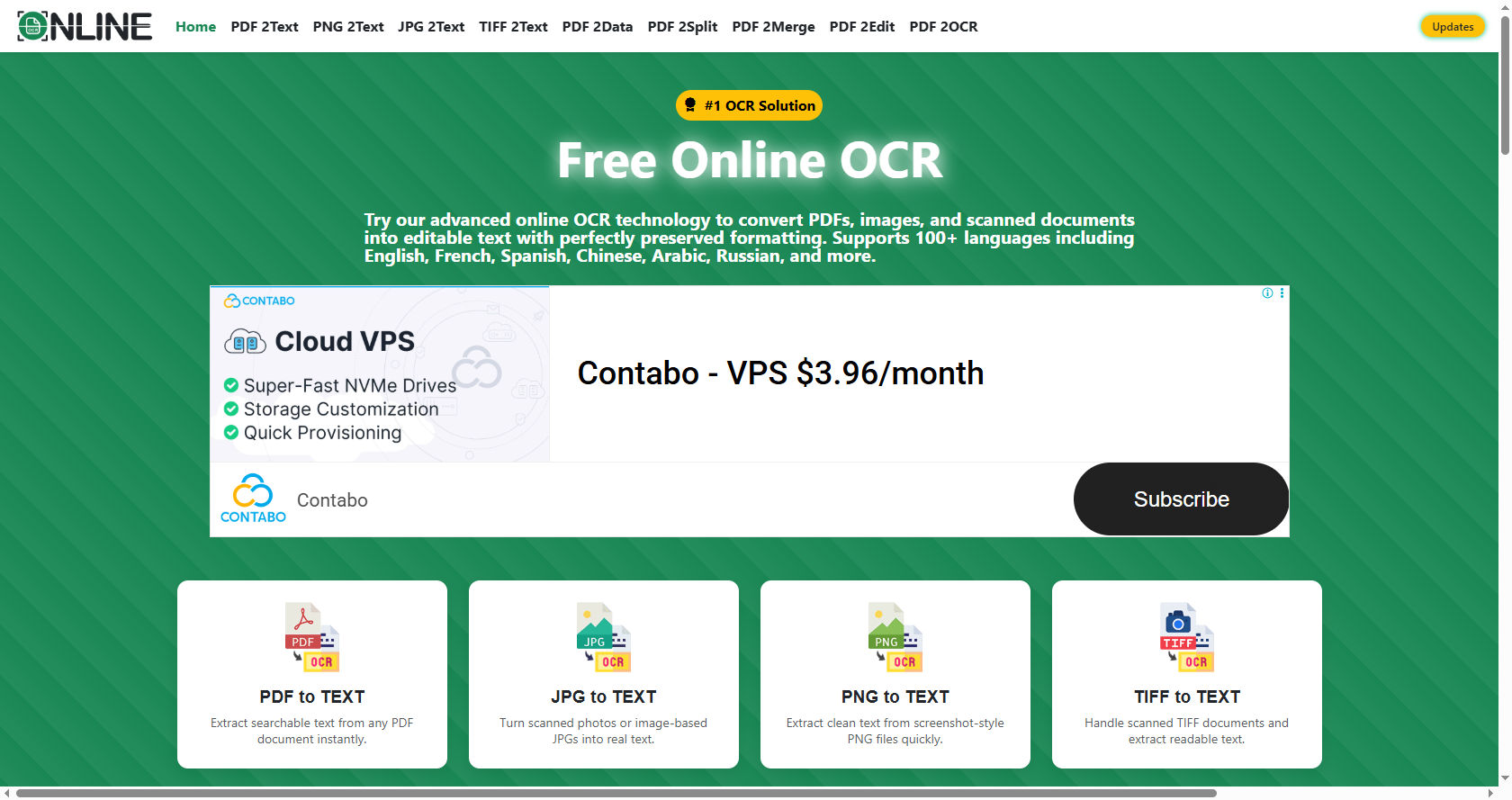
Traditionally, extracting text from such files required manual typing, which was time-consuming and prone to errors. This is where Online OCR comes in as a powerful solution.
Online OCR, or Optical Character Recognition, is a technology that converts images, scanned documents, and PDFs into editable text.
It allows users to extract words from pictures or documents without the need for manual typing. For students, professionals, and businesses, this tool is extremely useful for saving time and increasing productivity.
How Online OCR Works
Understanding the mechanics behind Online OCR can help you appreciate its efficiency. When you upload a scanned image or PDF to an Online OCR tool, the software analyzes the shapes of letters, words, and paragraphs. It then recognizes the patterns and converts them into machine-readable text.
Most Online OCR tools use advanced algorithms and artificial intelligence to improve accuracy. They can detect different fonts, sizes, and layouts. Some tools even support multiple languages, making them versatile for international users.
The process generally involves three main steps:
-
Upload – You start by uploading your document or image to the Online OCR tool. Most platforms support formats like JPG, PNG, BMP, GIF, and PDF.
-
Recognition – The software scans the document and identifies the text. It distinguishes letters, numbers, and symbols from background images.
-
Download – After recognition, you can download the extracted text in various formats like Word, Excel, or plain text for further editing.
This simple process eliminates hours of manual work, especially for large documents.
Benefits of Using Online OCR
The advantages of using Online OCR extend beyond just saving time. Let’s explore some of the key benefits:
Saves Time and Effort
Typing text manually from scanned documents can be extremely tedious. Online OCR automates this task, allowing you to extract text quickly. This is especially useful for students who need to convert study materials or for professionals handling large amounts of paperwork.
Accurate Text Extraction
Modern Online OCR tools are highly accurate. They can recognize text even from slightly blurred or low-quality images. While some errors might still occur, the accuracy is generally high enough for most purposes.
Supports Multiple Languages
Many Online OCR tools support multiple languages. This makes it ideal for users working with documents in different languages. For instance, a business dealing with international contracts can easily extract text in English, French, Spanish, or other languages.
Preserves Formatting
Some Online OCR tools go beyond plain text extraction and preserve the formatting of the original document. This means tables, bullet points, and headings can remain intact, saving additional editing time.
Enhances Productivity
By reducing manual effort, Online OCR improves productivity. Businesses can process invoices, receipts, and contracts faster. Students can quickly convert notes or reference books into editable documents.
Accessible Anywhere
Being online, these OCR tools are accessible from any device with an internet connection. There is no need to install complex software or worry about compatibility issues.
Types of Documents That Benefit from Online OCR
Online OCR is useful for a wide variety of documents. Some common examples include:
Scanned Books and PDFs
Students often scan textbooks or reference books to study digitally. Online OCR allows them to extract text from these scans for easy annotation and note-taking.
Business Documents
Invoices, receipts, and contracts often need to be stored digitally. With Online OCR, companies can convert these documents into editable formats for easier management and record-keeping.
Forms and Applications
Many forms are filled out by hand and later scanned. Online OCR can extract the information for further processing, reducing the need for manual data entry.
Images with Text
Screenshots, posters, or pictures containing text can be converted into editable formats. This is particularly helpful for designers, marketers, and researchers who need quick access to textual content.
How to Choose the Right Online OCR Tool
Not all Online OCR tools are created equal. Selecting the right tool can make a big difference in efficiency and accuracy. Here are some factors to consider:
Accuracy
Check the accuracy of text recognition, especially if you are working with complex documents. Tools using AI and advanced recognition algorithms generally provide better results.
Format Support
Ensure the tool supports the file formats you need. Common formats include JPG, PNG, BMP, GIF, and PDF. Some tools also allow conversion into Word, Excel, or plain text formats.
Language Options
If you work with multiple languages, choose an Online OCR tool that supports them. Some platforms support over 40 languages, while others may be limited.
Speed and Efficiency
Look for a tool that processes documents quickly. Large PDFs or high-resolution images can be time-consuming, so faster processing is advantageous.
Security and Privacy
Since you are uploading documents online, ensure the tool respects privacy. Check if the platform deletes files after processing and has secure data handling practices.
Additional Features
Some Online OCR tools offer extra features like batch processing, table recognition, or cloud integration. These can be valuable for heavy users or businesses.
Practical Uses of Online OCR
Online OCR is not just a convenience; it has practical applications in everyday life, education, and business.
Education
Students can use Online OCR to convert printed textbooks into digital notes. It is also useful for language learning, allowing learners to extract text from foreign language documents for translation or study.
Business Efficiency
Companies handle large volumes of paperwork daily. Online OCR streamlines processes like invoice management, contract analysis, and receipt tracking. This reduces errors and frees up employee time for more strategic tasks.
Accessibility
Online OCR improves accessibility for people with disabilities. For example, visually impaired users can convert printed text into formats compatible with screen readers.
Research and Content Creation
Researchers often need to extract text from historical documents, PDFs, or images. Online OCR allows quick conversion to editable formats for analysis, note-taking, or content creation.
Limitations of Online OCR
While Online OCR is a powerful tool, it does have some limitations:
Errors in Complex Layouts
Documents with complex layouts, handwritten text, or unusual fonts may not be perfectly recognized. Manual correction may still be necessary.
Quality Dependency
The accuracy of Online OCR depends on the quality of the original image or scan. Blurry or low-resolution documents may lead to errors.
Internet Dependency
Since Online OCR tools are online, you need a stable internet connection. Offline OCR software exists but may require installation and licensing.
Security Concerns
Uploading sensitive documents to an online platform can pose privacy risks. Always check the privacy policy and choose trusted tools for confidential files.
Tips for Using Online OCR Effectively
To maximize the benefits of Online OCR, consider the following tips:
-
Use High-Quality Scans – Clear images improve recognition accuracy.
-
Choose the Correct Language – Set the language correctly for better text extraction.
-
Check Formatting – After conversion, review the formatting to ensure it matches your needs.
-
Edit and Proofread – Even the best Online OCR tools may produce minor errors, so proofreading is essential.
-
Batch Processing – For multiple documents, use tools with batch processing to save time.
-
Secure Sensitive Files – Avoid uploading confidential documents to untrusted platforms.
Future of Online OCR
The future of Online OCR looks promising with the integration of artificial intelligence and machine learning. These technologies are making OCR tools more accurate, faster, and capable of handling complex documents.
AI-powered OCR can recognize handwriting more effectively, detect multiple languages in a single document, and even extract structured data from tables or forms. This evolution will expand the use cases of Online OCR in education, business, healthcare, and research.
Additionally, mobile OCR apps are becoming more common, allowing users to scan and extract text directly from their smartphones. This convenience makes OCR technology accessible anytime, anywhere.
Conclusion
Online OCR has become an indispensable tool in the digital age. Its ability to convert scanned documents, images, and PDFs into editable text saves time, reduces errors, and enhances productivity. From students needing digital notes to businesses managing documents efficiently, the applications are vast.
While there are limitations, careful use and selection of the right tool can maximize benefits. The technology continues to improve with AI integration, making Online OCR more accurate and versatile than ever.
In summary, Online OCR bridges the gap between physical documents and digital text, empowering users to work smarter, faster, and more effectively. Whether for educational, professional, or personal use, it is a tool that no one should overlook in today’s fast-paced world.