
Why Thumbnail Save Simple Guide?

In today’s digital world, images play a huge role in how we communicate, share, and explore content online. One of the most common tasks people face is saving small, preview images from videos, websites, or social media.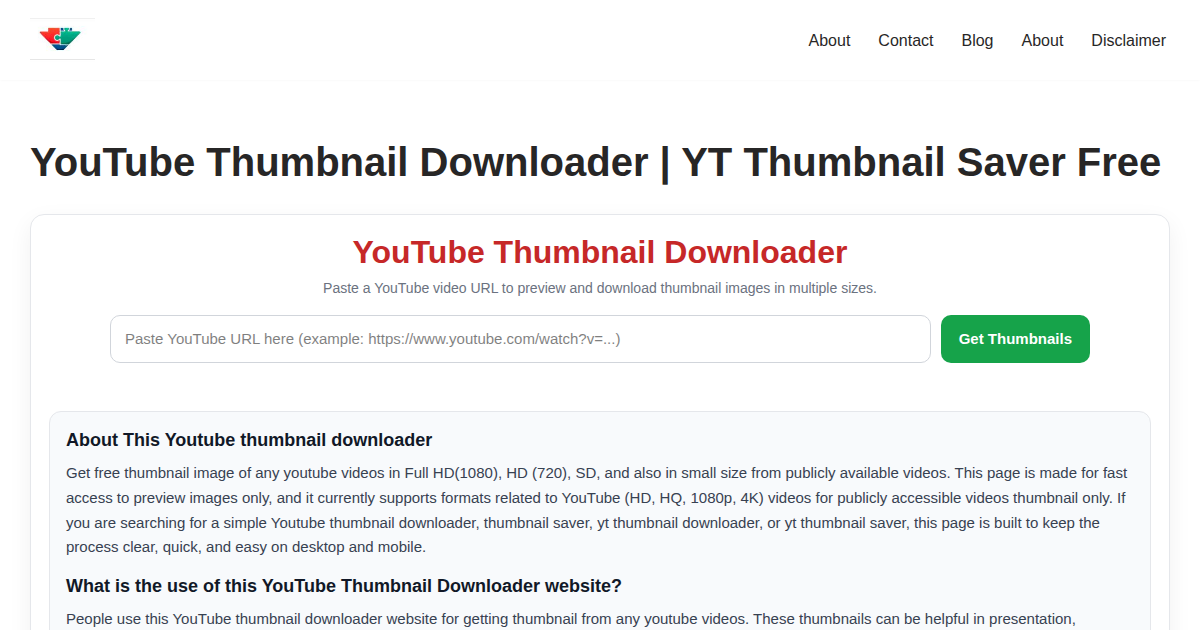
This is where Thumbnail Save becomes an important tool. In this guide, we will explore everything you need to know about saving thumbnails, why it matters, and how you can do it effectively.
By the end, you will have a clear understanding of how Thumbnail Save works and how it can be useful in your daily digital life.
Thumbnails
Thumbnails are small, reduced-size versions of images or videos. They are designed to give viewers a quick preview before clicking to view the full content. Think of them as the cover of a book. A good thumbnail can attract attention and influence whether someone decides to click on a video or link.
The main purpose of thumbnails is to make navigation faster. For websites, thumbnails save bandwidth by loading smaller images instead of large full-size files. For videos, platforms like YouTube use thumbnails as a visual summary of the video content.
Saving thumbnails can be useful for multiple reasons. You may want to save a favorite video thumbnail, create a gallery, or even use them for presentations. Learning the art of Thumbnail Save ensures you can preserve these images for later use without hassle.
Why You Might Need to Save Thumbnails
There are several reasons why someone would want to Thumbnail Save images. Here are some common scenarios:
-
Content Creation: If you create videos or blogs, thumbnails are a critical part of content marketing. Having a local copy of your thumbnails can help you reuse them in promotions.
-
Archiving and Reference: Sometimes, you may want to save thumbnails for personal reference or archiving purposes. This is especially useful for videos or images that might be removed from the internet later.
-
Educational Purposes: Teachers and students often use thumbnails in presentations, reports, or project work. Thumbnail Save allows easy access to visual aids without downloading full-size files.
-
Social Media Sharing: Social media managers frequently reuse thumbnails for posts, advertisements, or collages. Saving them locally ensures they are readily available.
-
Offline Access: Saving thumbnails lets you access images without an internet connection, which is helpful when working in low-bandwidth areas.
By understanding these reasons, it’s clear that Thumbnail Save is not just a convenience but an essential skill for anyone working with digital media.
Different Types of Thumbnails
Not all thumbnails are the same. When you decide to Thumbnail Save, it helps to know the types available:
Video Thumbnails
Video thumbnails are perhaps the most common. Platforms like YouTube, Vimeo, and TikTok automatically generate thumbnails for videos. Creators can also upload custom thumbnails to represent their content more attractively.
Image Thumbnails
Image thumbnails are smaller versions of original pictures. They appear on websites, galleries, and social media feeds. Websites often display thumbnails in search results or in photo collections.
Dynamic Thumbnails
Some websites generate dynamic thumbnails that change depending on user interaction or preferences. These thumbnails may need special methods to Thumbnail Save, as they may not appear as static images.
Understanding the type of thumbnail is important because it determines the best method to save it.
Methods to Save Thumbnails
Saving thumbnails can be done in several ways. Here, we’ll break down the easiest and most reliable methods.
Method 1: Using Right-Click Save
For most static images, the simplest method is to use the right-click menu:
-
Hover your cursor over the thumbnail.
-
Right-click and choose “Save Image As.”
-
Select a location on your device and click “Save.”
This method works for standard thumbnails but may not work on sites that block right-clicks.
Method 2: Browser Extensions
Browser extensions are useful tools for Thumbnail Save tasks, especially when dealing with multiple images or restricted websites. Some popular extensions allow batch downloading and quick saving of images without affecting page layout.
Method 3: Using Online Tools
Several online websites are designed to help users Thumbnail Save images from video platforms or social media. You usually copy the video link, paste it into the tool, and download the thumbnail. These tools often allow you to choose different thumbnail resolutions.
Method 4: Screenshot Method
If all else fails, taking a screenshot is a universal solution. Simply display the thumbnail on your screen, use your device’s screenshot feature, and crop the image. While this may reduce quality slightly, it guarantees you get the image when other methods fail.
Method 5: Using Developer Tools
For tech-savvy users, browser developer tools provide a precise way to Thumbnail Save images. By inspecting the page elements, you can find the direct image link and download the full-resolution thumbnail. This method works on most platforms but requires some technical understanding.
Best Practices for Saving Thumbnails
To ensure the best results when you Thumbnail Save, follow these tips:
-
Check the Resolution: Higher resolution thumbnails look better in presentations or social media. Some online tools allow selecting between different resolutions.
-
Organize Files: Keep saved thumbnails in dedicated folders. Categorize by topic, source, or date to make retrieval easier.
-
Respect Copyrights: Only use saved thumbnails for personal use, educational purposes, or content you own. Avoid using others’ thumbnails commercially without permission.
-
Backup Regularly: Store backups of important thumbnails on cloud services or external drives to prevent loss.
-
Use Clear File Names: Name your thumbnail files clearly to make searching and sorting easy later.
Following these practices ensures your Thumbnail Save efforts are productive, organized, and legally safe.
How to Save Thumbnails from YouTube
YouTube thumbnails are particularly popular. Here’s a step-by-step guide to save them:
-
Copy the video URL.
-
Use an online thumbnail downloader website.
-
Paste the URL and select the thumbnail resolution.
-
Click “Download” to save it to your device.
Alternatively, for advanced users, you can modify the YouTube video URL to access the direct thumbnail link. For example, replacing the video ID in a specific URL format allows direct downloading.
Saving Thumbnails on Social Media Platforms
Different social media platforms have different methods:
-
Instagram: Screenshots are common because Instagram doesn’t provide a direct download. Some third-party apps also allow thumbnail saving.
-
Facebook: Right-clicking or inspecting the image works for most posts.
-
Twitter/X: Right-click or download from the media viewer. Some tools help save multiple thumbnails quickly.
Always remember that social media content is often copyrighted, so use it responsibly.
Tools and Software for Thumbnail Save
Several software tools make the process easier:
-
Online Downloaders: Websites like SaveTheVideo, GetYouTubeThumbnail allow quick downloads.
-
Desktop Software: Programs like 4K Video Downloader can download video thumbnails in bulk.
-
Browser Extensions: Extensions for Chrome and Firefox enable batch saving of thumbnails from websites.
These tools simplify the Thumbnail Save process and are essential for content creators and researchers.
Quality Considerations
When saving thumbnails, quality matters:
-
Resolution: A thumbnail with higher resolution is more versatile. Always opt for the highest quality when available.
-
Aspect Ratio: Maintain the original aspect ratio to avoid stretching or distortion.
-
Compression: Avoid excessive compression, as it can degrade image quality.
High-quality thumbnails can be used for multiple purposes, including marketing, presentations, or content reuse.
Common Mistakes to Avoid
Here are mistakes to avoid when you Thumbnail Save:
-
Saving thumbnails without checking resolution.
-
Ignoring copyright restrictions.
-
Not organizing files, leading to lost or duplicated images.
-
Over-reliance on screenshots, which can reduce quality.
-
Forgetting to backup files.
By avoiding these mistakes, your Thumbnail Save experience becomes smoother and more efficient.
Legal and Ethical Considerations
It’s important to understand the legal and ethical aspects of saving thumbnails:
-
Copyright Laws: Most thumbnails are protected under copyright. Saving for personal use is generally safe, but using them commercially may require permission.
-
Fair Use: Educational purposes often fall under fair use, but it’s best to credit the source.
-
Platform Policies: Some platforms restrict downloading content. Always review their terms before saving thumbnails.
Respecting these rules ensures you can Thumbnail Save responsibly and avoid potential legal issues.
Organizing Saved Thumbnails
Once you have a collection of thumbnails, organization is key. Consider these tips:
-
Create folders by topic, platform, or project.
-
Use consistent naming conventions for easy retrieval.
-
Tag thumbnails with keywords or metadata if your software allows it.
-
Regularly clean up old or unused thumbnails to save storage.
An organized collection makes Thumbnail Save practical and efficient.
Advanced Tips for Power Users
For advanced users, there are several techniques to enhance Thumbnail Save:
-
Use automation tools or scripts to batch-download multiple thumbnails.
-
Combine thumbnails into visual collages for projects.
-
Use cloud storage with tagging for easy access across devices.
-
Employ image editing software to enhance thumbnails before reuse.
These tips save time and improve the usability of your saved thumbnails.
Conclusion
Thumbnail Save is a simple yet powerful skill for anyone who works with digital content. Whether you are a student, teacher, content creator, or social media manager, knowing how to save thumbnails efficiently can save time, improve productivity, and enhance creativity.
In this guide, we explored what thumbnails are, why saving them is useful, the different types of thumbnails, and multiple methods to save them. We also discussed best practices, quality considerations, legal and ethical issues, and tips for organization. By applying these techniques, you can make the most out of every thumbnail you encounter.
Remember, saving thumbnails is not just about convenience—it’s about making your digital workflow smarter and more organized. By following this guide, you can confidently Thumbnail Save images from videos, social media, and websites for personal, educational, and creative uses.